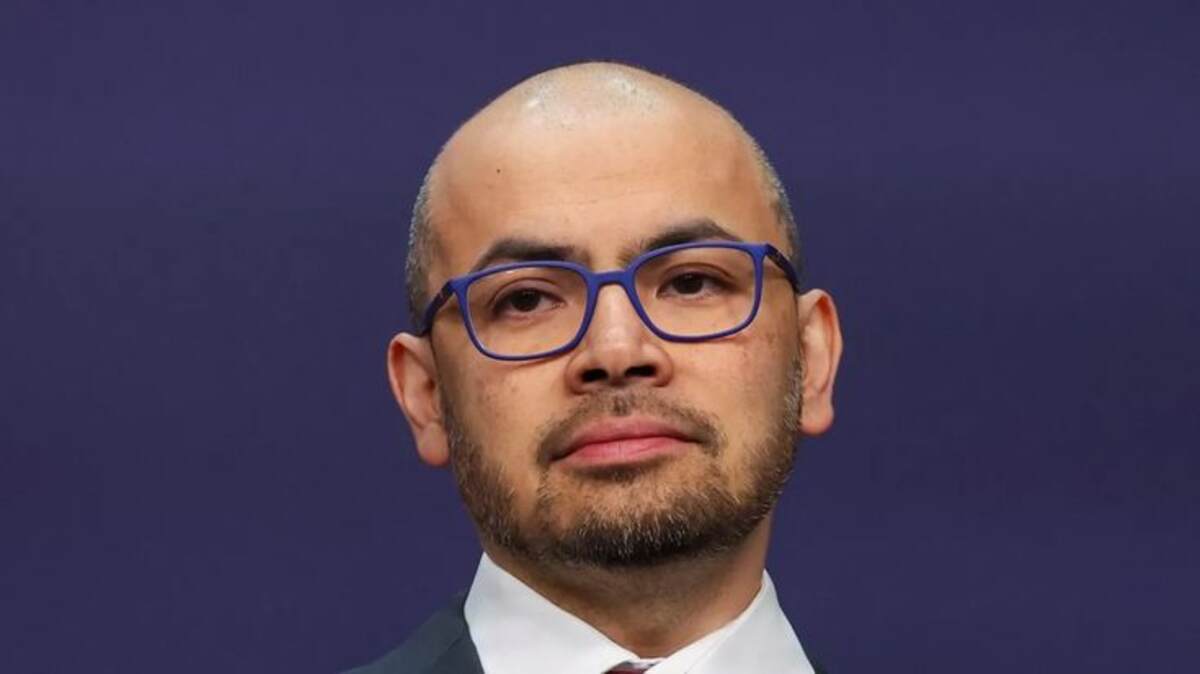
In a series of recent statements and interviews, Demis Hassabis, CEO of Google DeepMind, has emerged as one of the most influential and provocative voices in the global artificial intelligence conversation — critiquing current AI trajectories, challenging common beliefs about AI capabilities, and painting a bold picture of where the technology is heading.
Hassabis, whose leadership at DeepMind has helped pioneer some of the field’s most advanced models and research, recently stirred the AI world by publicly challenging the notion that today’s large language models (LLMs) — like OpenAI’s ChatGPT — are on a direct path to true Artificial General Intelligence (AGI). In a CNBC “The Tech Download” podcast, he argued that “scaling up” language models — the dominant strategy used by many AI labs — will eventually hit a fundamental wall because these models lack a “world model.” Without this deeper understanding of causality and the ability to simulate real-world dynamics, they are limited to pattern prediction rather than true reasoning.
Unlike models that simply predict the next word, Hassabis believes true scientific breakthroughs — such as genuine reasoning about physics, chemistry, or cause-and-effect reasoning — demand systems that can simulate reality internally. He asserts that DeepMind’s hybrid approach, which builds these simulation capabilities into its agents and models, gives it a strategic edge over rivals focused primarily on scaling LLMs.
This stance marks a clear departure from the dominant industry narrative — most notably championed by OpenAI — that “bigger is better” and that continually increasing model size and training data will eventually produce human-level or superintelligent AI. By contrast, Hassabis suggests that innovation in architecture and internal world modeling is essential to move beyond the current generation of models.
Hassabis also recently corrected assumptions about global AI competition, particularly statements from U.S. analysts about China’s position in the AI race. Speaking on CNBC’s “The Tech Download”, he noted that Chinese AI systems are now only “a matter of months” behind Western systems, a stark contrast to prevalent beliefs that China lagged far behind. Still, he emphasized that innovation — not merely catching up — remains the critical differentiator.
Beyond technical debates, Hassabis has also been outspoken about AGI timelines, estimating that human-level AI could emerge within the next 5 to 10 years — a prediction that continues to fuel global discussions about the pace of AI progress and its societal impacts.
So why does Hassabis’s perspective matter now? For years, DeepMind has been at the forefront of AI research, producing landmark innovations such as AlphaFold — the protein-folding AI system that has transformed biological research and won a Nobel Prize in Chemistry in 2024.
But his latest remarks are resonating not just because of DeepMind’s scientific pedigree, but because they challenge the prevailing industry consensus at a pivotal moment: AI development is accelerating, investment is soaring, and global competition — between companies and nation-states — is intensifying. The questions Hassabis raises about how AI should be built and what true intelligence really means are now shaping broader debates about strategy, safety, and governance.
Critics of the scaling-only approach argue that while today’s AI systems can perform impressive feats, they still falter on basic reasoning, struggle with consistency, and can make glaring factual errors — characteristics that show limitations when interpreted as “intelligence.” Hassabis’s focus on simulation and world modeling aims to address these very issues by teaching AI systems how the real world works, not just what words typically follow other words.
Industry watchers suggest that this philosophical rift may influence where research dollars flow, how companies prioritize safety versus capability, and even how regulations could evolve as true AGI approaches reality. The stakes are high — from economic disruption and job displacement to ethical concerns and existential risks — and the timing of these debates couldn’t be more urgent.
Whether or not Hassabis’s vision ultimately proves correct, his public critiques and strategic positioning are shaking up discussions across the AI ecosystem. By challenging assumptions about current models, highlighting the importance of deeper understanding and world simulation, and calling attention to the geopolitical dimensions of AI progress, the DeepMind CEO is helping redefine the conversation around the future of artificial intelligence — and what it will take to reach the next frontier.