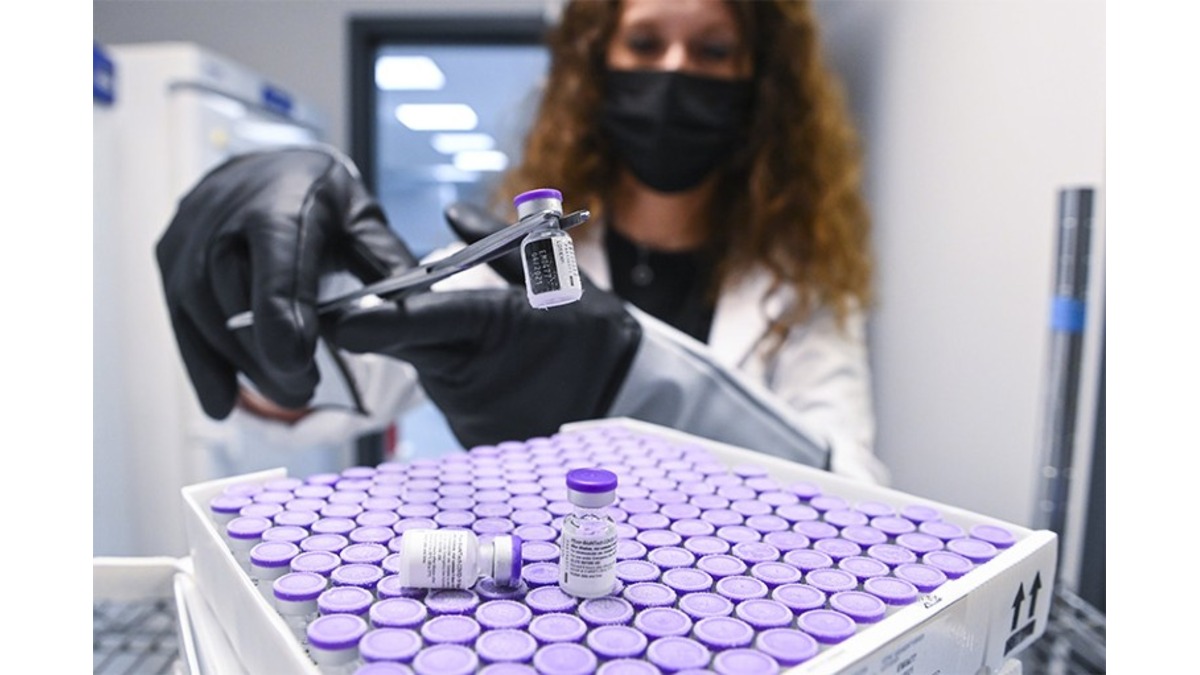
Pfizer has announced a major advancement in its next-generation mRNA vaccine platform, marking a significant step toward faster development, manufacturing, and global rollout of future vaccines. Building on the success of its earlier mRNA-based COVID-19 vaccine, Pfizer’s latest platform is designed to improve speed, stability, and adaptability—key factors in responding to emerging infectious diseases and public health threats.
The updated mRNA platform focuses on streamlining the entire vaccine lifecycle, from early research to large-scale production. According to Pfizer, the new system reduces development timelines by optimizing how mRNA sequences are designed, tested, and validated. This allows scientists to move from pathogen identification to clinical-ready vaccine candidates in a much shorter timeframe than traditional vaccine methods.
One of the most notable improvements lies in mRNA stability. Earlier mRNA vaccines required ultra-cold storage conditions, creating logistical challenges, particularly in low- and middle-income regions. Pfizer’s next-generation platform incorporates enhanced molecular design and delivery technologies that improve temperature tolerance. This advancement could enable vaccines to be stored at standard refrigeration temperatures, significantly simplifying transportation and distribution across global healthcare systems.
Manufacturing scalability is another core pillar of the new platform. Pfizer has re-engineered its production processes to allow faster scaling without compromising quality or safety. Modular manufacturing units and standardized production steps mean that facilities can quickly switch between different vaccine targets if needed. This flexibility is crucial during outbreaks, where rapid response can determine how effectively a virus is contained.
The platform also supports multivalent vaccines, which can target multiple strains or variants within a single dose. This capability is particularly important as viruses continue to mutate, making strain-specific vaccines less effective over time. By enabling broader immune coverage, Pfizer aims to reduce the need for frequent reformulations and booster campaigns.
From a clinical perspective, the next-generation mRNA platform is designed to improve immune response while minimizing side effects. Pfizer scientists have refined how the mRNA instructs cells to produce antigens, leading to more precise immune activation. Early-stage studies suggest this approach may deliver stronger and longer-lasting protection with lower doses, potentially improving vaccine safety profiles and reducing production costs.
Beyond infectious diseases, Pfizer plans to expand the platform’s applications into oncology, rare diseases, and personalized medicine. mRNA technology has shown promise in cancer vaccines, where treatments can be tailored to individual patients based on their tumor profiles. The enhanced platform could accelerate the development of such personalized therapies, opening new frontiers in precision healthcare.
Global health preparedness is a key driver behind Pfizer’s investment in next-generation mRNA technology. The company is working closely with international health organizations and governments to ensure rapid deployment pathways are in place before the next major health crisis emerges. Lessons learned from the COVID-19 pandemic have underscored the importance of readiness, coordination, and manufacturing resilience.
Industry experts view Pfizer’s announcement as a pivotal moment for mRNA technology. While the initial wave of mRNA vaccines proved the concept, the next phase is about refinement, efficiency, and accessibility. By addressing limitations related to storage, speed, and scalability, Pfizer is positioning its platform as a long-term solution rather than an emergency-only tool.
The advancement also reflects a broader shift within the pharmaceutical industry toward platform-based innovation. Instead of developing vaccines from scratch for each new threat, companies like Pfizer are building adaptable frameworks that can be rapidly customized. This approach not only reduces costs but also enhances global response capabilities.
As Pfizer moves toward clinical trials and regulatory pathways for vaccines developed using this next-generation platform, expectations are high that the technology will reshape how vaccines are created and delivered. With faster rollouts, improved stability, and wider applicability, Pfizer’s mRNA advancements could play a central role in protecting global health in the years ahead.