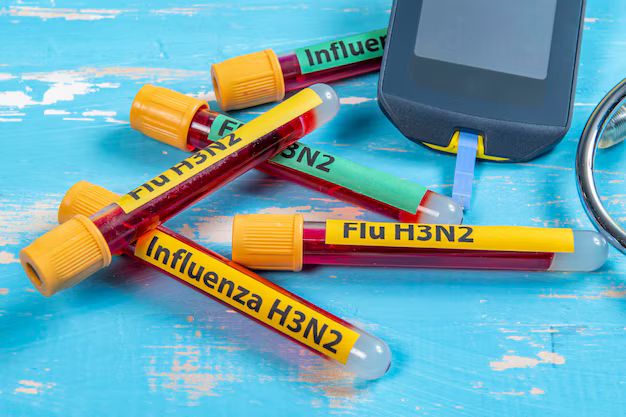
Health authorities worldwide are raising alarms as early surveillance data from Canada, the United Kingdom, and Japan points to an unusually aggressive H3N2 influenza variant that could dominate the upcoming 2025-2026 Northern Hemisphere flu season. Experts warn this strain may drive higher hospitalization rates and more severe illness than recent years, particularly among older adults, young children, and those with underlying conditions.
The warning stems from coordinated global monitoring networks, including the World Health Organization’s Global Influenza Surveillance and Response System (GISRS). Laboratories in all three countries have detected a drifted H3N2 subtype—officially A/Victoria/4897/2022 (H3N2)-like—that shows significant antigenic changes compared to the strain included in current 2024-2025 vaccines. Preliminary studies suggest the existing trivalent and quadrivalent shots may offer only partial protection, with vaccine effectiveness potentially dropping below 40 percent against this variant.
In Canada, the Public Health Agency reported that H3N2 already accounted for over 65 percent of typed influenza A cases during the early part of the 2025 Southern Hemisphere season spillover. Hospital surveillance in British Columbia and Ontario recorded a sharp uptick in severe cases among adults aged 65 and older, with ICU admissions running 25 percent higher than the five-year average for the same period.
Across the Atlantic, the UK Health Security Agency (UKHSA) flagged similar trends. Genomic sequencing of samples from England and Scotland revealed the drifted variant in nearly 70 percent of H3N2-positive tests since late September 2025. UKHSA modeling predicts that, without updated vaccine components, the United Kingdom could face one of its most intense flu seasons since 2017-2018, when excess winter mortality exceeded 50,000 deaths.
Japan’s National Institute of Infectious Diseases (NIID) provided some of the earliest red flags. The country, which often serves as a sentinel for Northern Hemisphere trends due to its rigorous testing regime, documented the variant in 78 percent of influenza detections during October-November 2025. Pediatric hospitals in Tokyo and Osaka reported overflowing wards, with complication rates—especially bacterial pneumonia co-infections—noticeably higher than previous H3N2-dominant seasons.
The WHO’s latest advisory, released November 17, 2025, recommends that manufacturers prioritize an updated H3N2 component for the 2026 Northern Hemisphere vaccines. However, the timeline poses challenges: even with accelerated regulatory pathways, new formulations may not reach most countries until March or April 2026—well after the typical December-to-February peak.
Health officials are urging immediate non-pharmaceutical interventions alongside vaccination. Canada’s chief public health officer, Dr. Theresa Tam, stressed the importance of “layered protection”: getting the current vaccine (which still offers cross-protection and prevents severe outcomes in many cases), wearing masks in crowded indoor settings, improving ventilation, and staying home when sick.
The U.S. Centers for Disease Control and Prevention (CDC) echoed the concern in its weekly FluView report, noting early community transmission of the drifted strain in several southern states. CDC Director Dr. Mandy Cohen stated, “We are closely monitoring this evolution. While it’s too soon to predict exact severity, historic patterns with significant H3N2 drift have led to challenging seasons.”
For vulnerable populations, antiviral medications like oseltamivir (Tamiflu) remain effective against the variant and should be prescribed early—ideally within 48 hours of symptom onset. Doctors are also advised to maintain high suspicion for influenza in patients presenting with fever and respiratory symptoms, even if rapid tests are negative, as some antigen tests show reduced sensitivity to the new drift.
As winter approaches, the convergence of data from three continents underscores a clear message: the 2025-2026 flu season carries elevated risk. Public health agencies are calling on individuals, employers, and schools to reinforce basic prevention measures now—before the variant establishes widespread circulation.