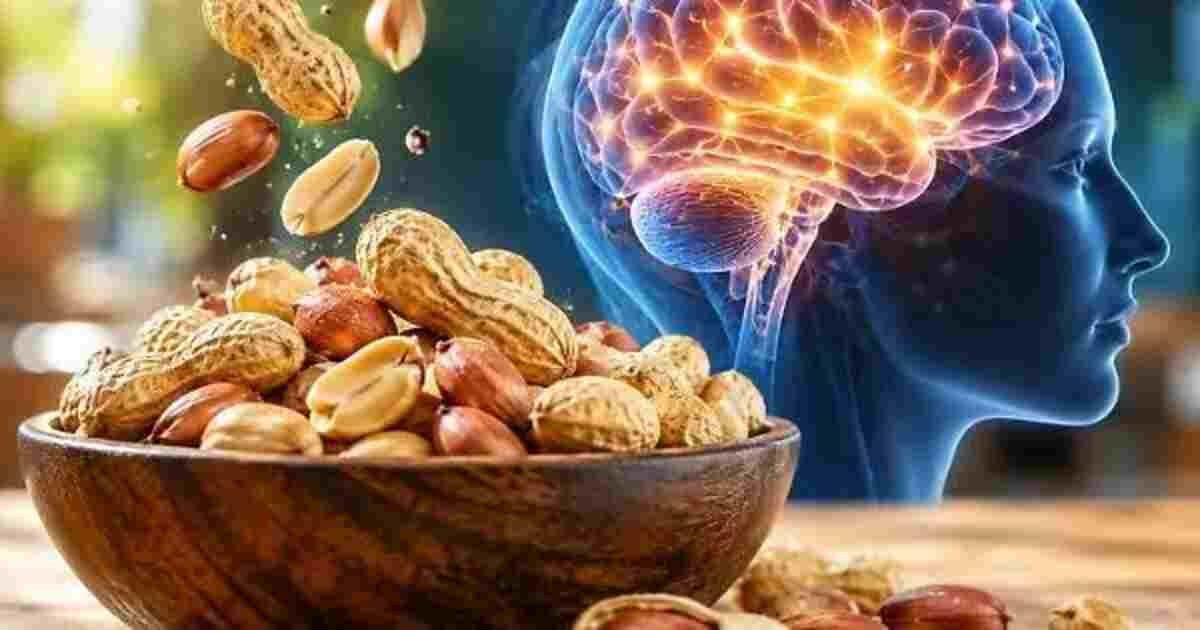
Popular as a cheap snack food, peanuts may have even greater benefits than previously thought, based on new research. Researchers at Maastricht University Medical Center in the Netherlands have discovered that eating unsalted, skin-roasted peanuts can help boost the way the brain reacts to insulin in seniors. The finding might be used to further examine how diet affects memory.
The study, which is published today in Food & Function, was designed to test if consumption of peanuts over months might alter insulin response in memory-related regions of the brain. It contributes to an expanding body of research exploring the links between diet, metabolic health and the aging brain. But more research is needed before peanuts can be recommended for dementia or Alzheimer’s prevention.
Most people know insulin from its important role in controlling blood glucose, but it’s also vital to the function of your brain. It promotes communication between neurons, and it’s involved in processes related to learning, memory, and neuron activity.
Researchers have hypothesised that certain regions of the brain may be less responsive to insulin in aged brains. Such a response is of interest to researchers as impaired brain insulin signalling has been linked to metabolic and cognitive decline.
By examining changes in blood flow to the brain after insulin was given through the nose using state-of-the-art magnetic resonance imaging, the team was able to look at how specific parts of the brain react to the hormone instead of using just blood sugar levels.
The study involved 31 healthy older adults, with a mean age of about 67 years. Participants consumed 60 grams of unsalted, skin-roasted peanuts each day for 16 weeks, and also completed a separate control period during which they did not eat peanuts. The two phases were separated by an eight-week washout period.
What they discovered was an altered blood-flow response to insulin in an area of the right side of the brain that, as well as the hippocampus, was found to include the parahippocampal gyrus and other brain areas involved in both the processing and formation of information and memories.
Regular peanut intake could be modulating the insulin sensitivity of certain regions of the aging brain, the researchers said. But they did not find that blood markers of blood sugar control, fat metabolism or inflammation changed Really.
A small sample size is another limitation as these findings will need to be confirmed in larger studies before scientists can understand just how generally these effects occur.
Previous research from the same study population, published in the journal Clinical Nutrition, also found that daily peanut eating for 16 weeks produced a 3.6% increase in total blood flow in the brain and a 5.8% increase in a verbal memory task when tested in delayed recall.
Previous research also showed that systolic blood pressure levels decreased with the peanut intervention. But researchers did not observe improvements in all cognitive assessments, like those measuring executive function and psychomotor speed.
Together, the studies indicate that peanuts may affect certain aspects of brain vascular function and memory performance in healthy older adults. Still, they do not show that eating peanuts prevents age-related cognitive disorders or reverses existing neurological damage.